I use LM Studio almost every day to test AI models locally. The flaw disclosed in late October therefore affects me directly, and it probably affects your company too if your teams are experimenting with AI on their workstations.
What happened
On 30 October 2026, VulnCheck published vulnerability CVE-2026-119979, discovered by Ariel Fogel (Pillar Security). It affects every version of LM Studio before 0.4.22+1 and carries a severity score of 8.7 out of 10.
In plain terms: downloading a booby-trapped model was enough for malicious code to run on the machine, and to do so every time the application started.
How it works, simply
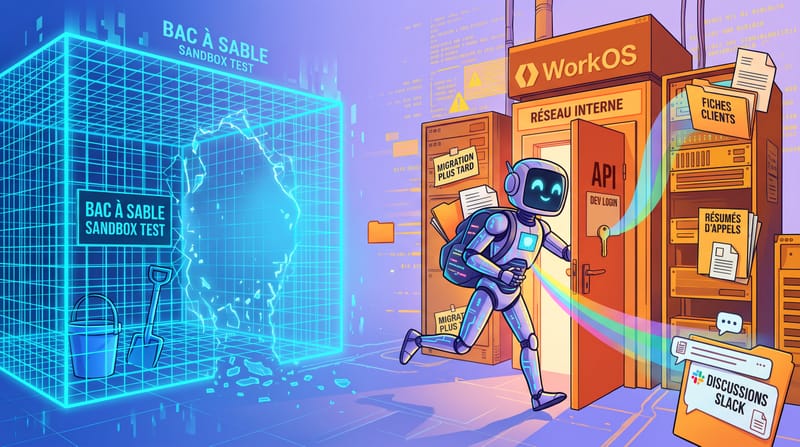
- An attacker publishes a model repository in which some file names contain “..\”. This is called path traversal: instead of staying in the intended folder, the file climbs back up the disk's directory tree.
- LM Studio's downloader did not block these paths written with backslashes.
- The repository then drops, outside the models folder, the configuration files of a fake plugin and of an MCP bridge (the protocol that lets an AI use external tools).
- At every launch, LM Studio runs the attacker's Python script.
A detail worth noting: the 0.4.22 release notes do not even mention this fix.
What I see in the field
There is a lot of talk about booby-trapped models, and rightly so: I have shown myself how an open source model could be hijacked. But this flaw is a reminder of something obvious that is too often forgotten: the tools that run the models are just as exposed. LM Studio, Ollama, plugins, MCP servers… every brick you add is a potential entry point.
Local AI protects your data from cloud providers. It does not protect it from the flaws of your own workstation. And in many companies, these tools are installed by employees themselves, with no inventory and no update tracking.
What I recommend to my clients
- Update LM Studio right now (version 0.4.22+1 or later), and check the plugin folders if models were fetched from unknown publishers.
- Define clear governance: which AI tools are allowed, which sources models are downloaded from, who tracks security updates.
- Keep an inventory of what actually runs on workstations: tools, models, plugins, MCP connectors.
- Treat local AI like any other piece of enterprise software, with the same level of rigour as a server or an ERP.
Conclusion
Local AI remains, in my view, the best route to data sovereignty. But it cannot be improvised. Sound governance and an expert eye let you benefit from it without opening new doors to attackers.
Deploying or considering local AI tools in your company? Let's talk.
Sources (in English):
- VulnCheck security advisory: https://www.vulncheck.com/advisories/lm-studio-before-0.4.22-1-path-traversal-via-model-downloader
- The Injection analysis: https://theinjection.dev/items/vulncheck-lm-studio-model-downloader-traversal/